Cheapest Solar Quotes vs Best Solar Quotes: The Difference
The cheapest solar quote is rarely the best solar quote. Here's what gets cut to make a quote cheap, what it costs you over a 10-year system life, and how to find the best value - not just the lowest price.
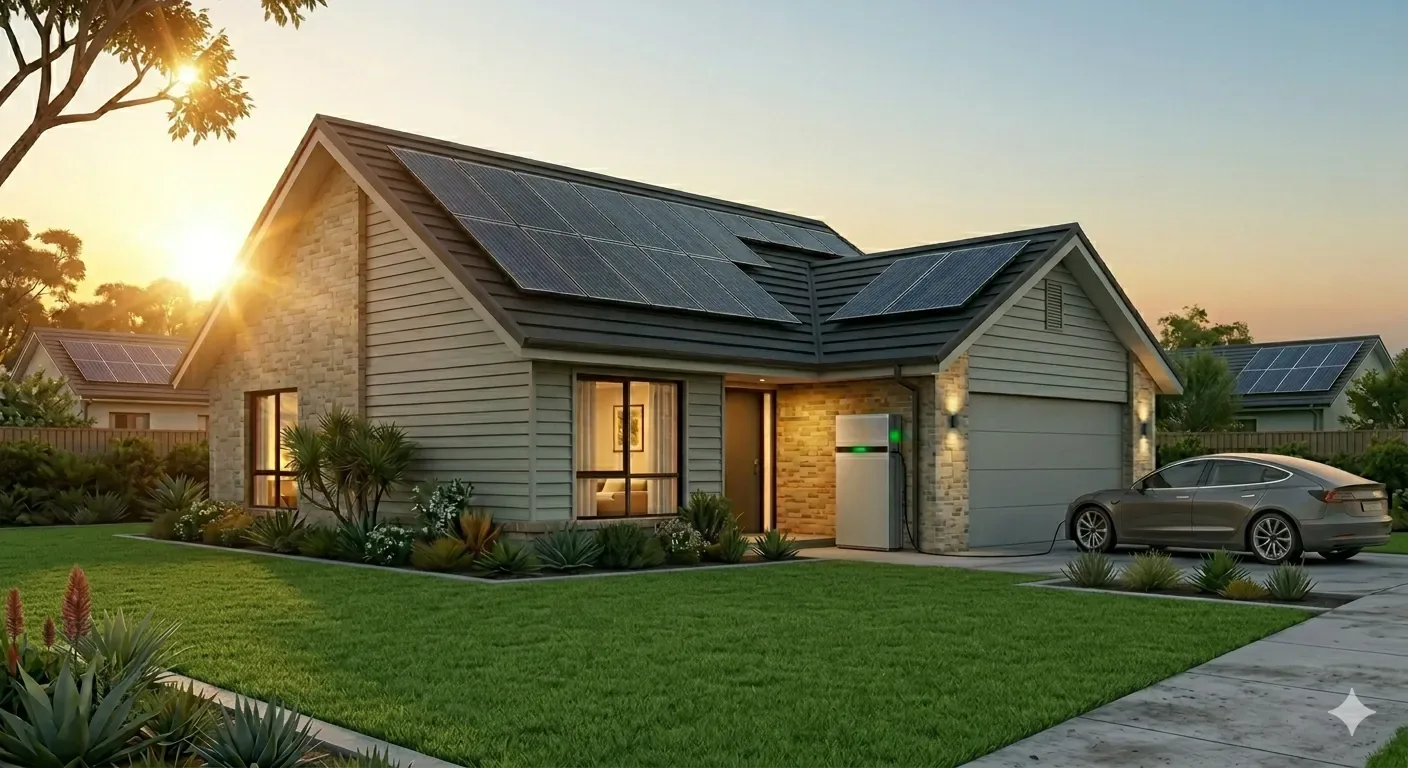
When three solar quotes come back and one is $2,000 cheaper than the others, the natural question is: what's the catch? Sometimes there isn't one - some installers are more efficient or have lower overhead. But often, the lower price reflects something that will cost you more later. Here's how to tell the difference.
What Gets Cut to Make a Quote Cheap
Panel brand. Unknown or off-brand panels can be 15–25% cheaper than established Tier-1 brands (Trina, Jinko, JA Solar, LONGi) and 30–40% cheaper than premium panels (REC, Q CELLS). The risk isn't usually immediate performance - it's warranty support when the manufacturer stops operating in Australia, or when a cell defect becomes apparent after year 8.
Inverter brand. Budget inverters from unknown manufacturers are $300–$800 cheaper than reputable brands like Fronius, SMA, Sungrow, or Huawei. Since inverters fail more frequently than panels, this is a false economy. A replacement inverter plus call-out fee typically runs $1,500–$2,500.
Workmanship warranty length. The industry standard from established installers is 10 years. A 5-year warranty saves the installer money if roof penetrations fail or connections corrode between years 5 and 10 - your risk, not theirs.
Installation quality. Some installers use subcontractors whose quality and experience varies. The quote price reflects this. Post-install problems - roof leaks, connection faults, system underperformance - that arise from poor installation are your problem to diagnose and fix, especially if the installer is hard to contact.
Grid connection fee. A quote that excludes the network application fee will look cheaper than one that includes it, even if the underlying install cost is identical.
What Genuine Value Looks Like
A genuinely competitive quote delivers good quality components and installation at a fair price - not the cheapest price. Signs of genuine value:
- Named Tier-1 panel brand with model number and full warranty terms
- Named inverter brand (Sungrow, Fronius, Huawei, SMA, or similar) with warranty
- 10-year workmanship warranty in writing
- CEC-accredited installer with verifiable local references
- Price that's at the lower end of the market range - not dramatically below it
The 10-Year Maths
A $5,000 quote with unknown panels and a 5-year workmanship warranty vs a $6,500 quote with Tier-1 panels, a reputable inverter, and a 10-year warranty:
If the cheaper system has one inverter failure ($2,000 repair) and one roof penetration issue ($500 call-out) in year 7, the total cost is $7,500. The $6,500 system with no failures costs $6,500.
The $1,500 gap at quote time disappears. This isn't guaranteed - plenty of budget installs run fine. But the risk profile is different, and the price gap rarely reflects the difference people assume.
How to Evaluate a Quote that Seems Too Cheap
Before dismissing a low quote or accepting it uncritically, ask:
- What panel brand and model? (Check the manufacturer's Australian warranty support)
- What inverter brand? (Check if they have an Australian office)
- Who does the installation - your own employees or subcontractors?
- What is the workmanship warranty, and is it in writing?
- Can you provide three recent local references I can contact?
If all five answers are satisfactory, a low quote may simply reflect a competitive installer. If any are evasive or unsatisfactory, the price discount is being funded by something.
For a full comparison framework, see our solar quotes guide.
Related Articles
Ready to check your roof?
Free roof suitability check in 60 seconds · No callbacks unless you ask.